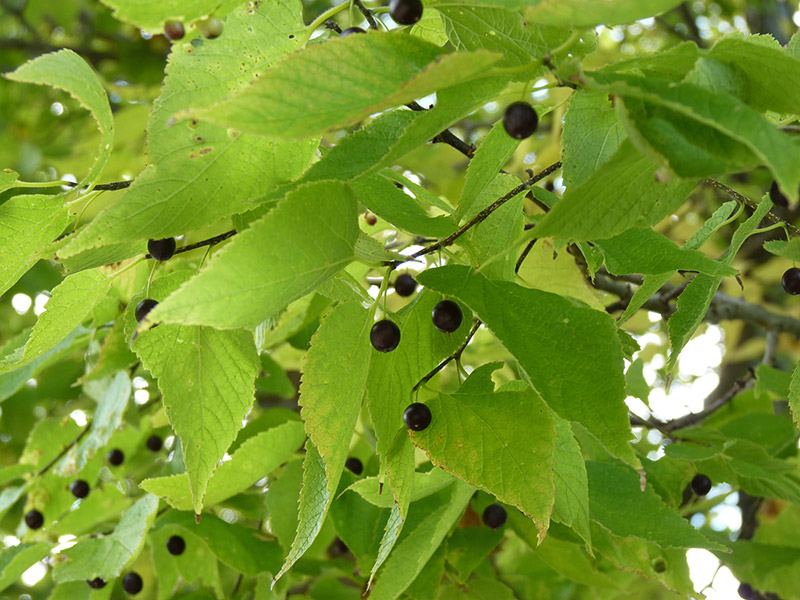
Common Hackberry
Native, resilient, and a quiet favorite of wildlife.
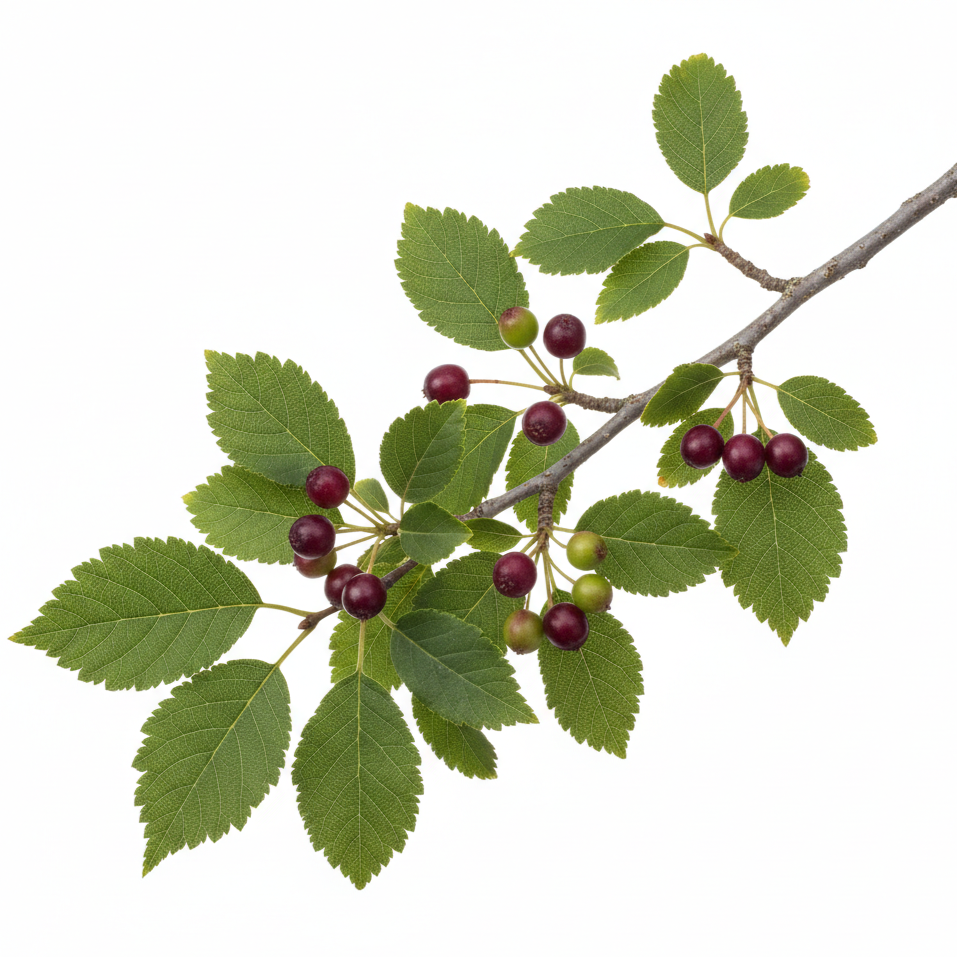
Common Hackberry is a tough, cold-hardy native tree found throughout the Midwest and Great Plains. With deeply ridged bark, graceful arching branches, and serrated leaves, it brings texture and shade to both urban and rural landscapes. It thrives in poor soils, drought, wind, and city conditions—making it a go-to for restoration, shelterbelts, and low-maintenance plantings.
In fall, hackberry produces small, dark purple berries that are edible for humans (though dry and date-like) and quietly beloved by wildlife. Birds—including cedar waxwings, robins, and mockingbirds—flock to the fruit, often preferring it over flashier options due to its late-season availability and high fat content. The tree also hosts several butterfly species, including the Hackberry Emperor and Tawny Emperor, making it a keystone plant for native habitat.
If you’re looking for a native tree that supports biodiversity, withstands tough conditions, and adds understated beauty to your landscape, common hackberry is a smart, sustainable choice.