Toka Plum (aka Bubblegum Plum)
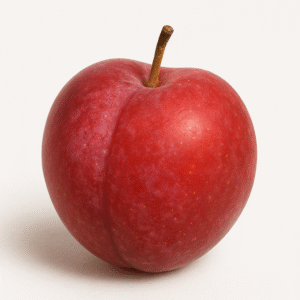
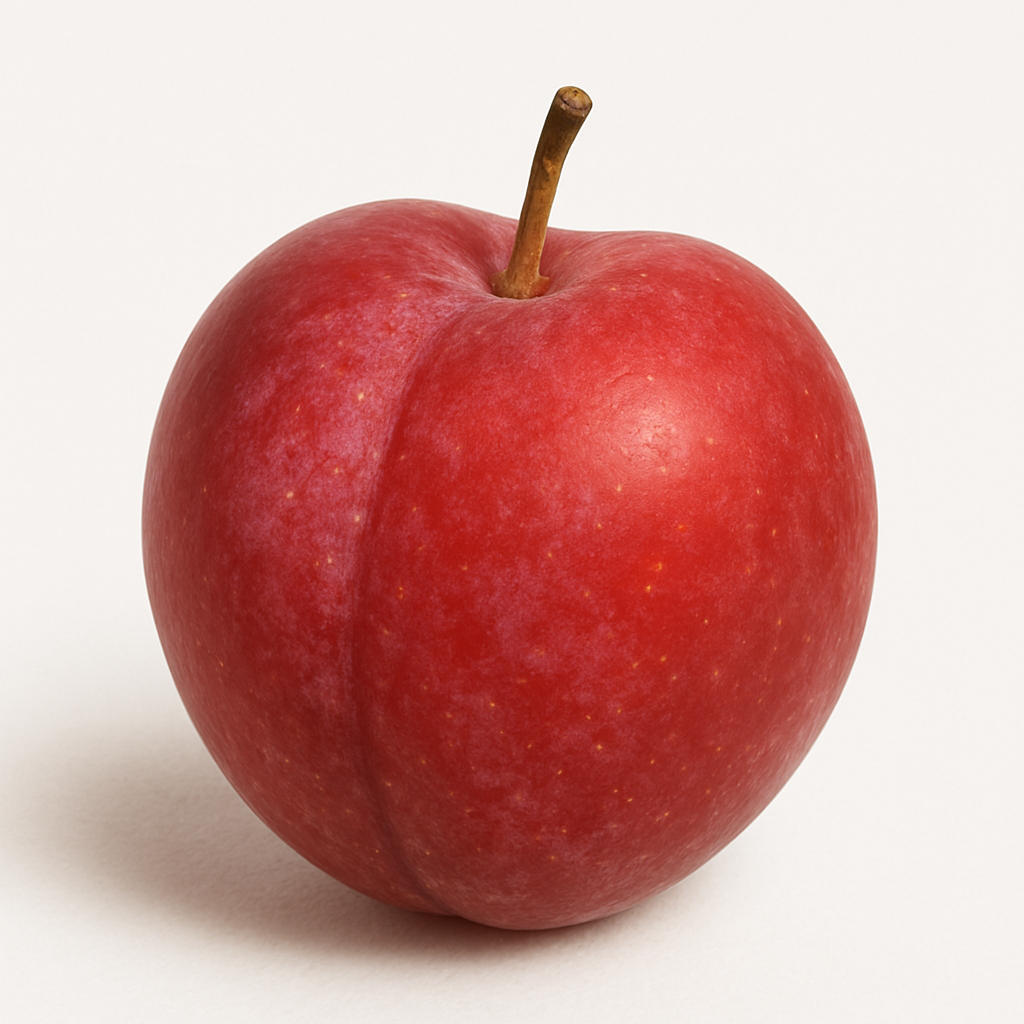
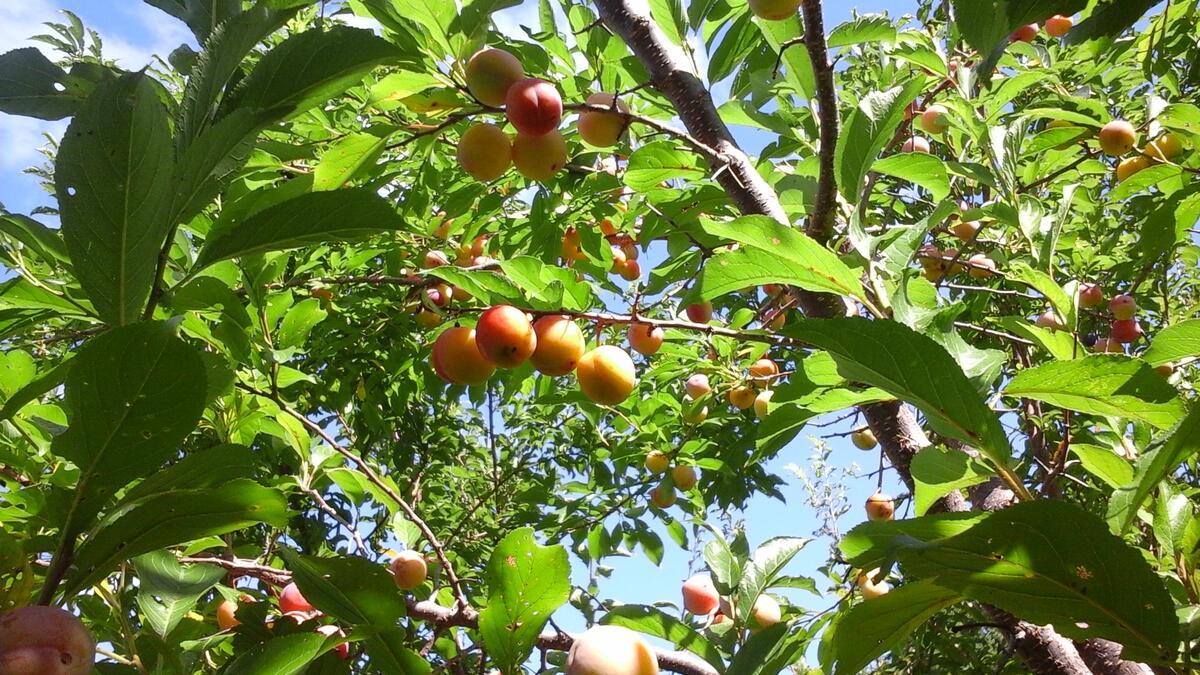
Only one Toka plum is required because it self-pollinates. Tons of pollen is produced that gives you a heavy harvest of fruit that also pollinates other plum trees. The fruits ripen in August – September. The skin is reddish-bronze and the flesh of the plum is an apricot-color. It takes extremely sweet, like candy, which is why it is sometimes called bubblegum plum.
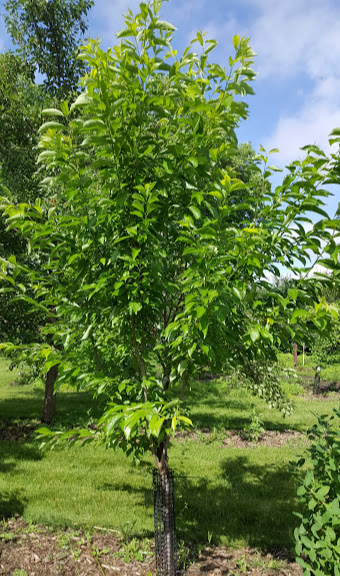
Creamy white flowers bloom in spring giving your landscape a beautiful display. The green foliage turns burgundy-purple in the autumn. Toka plum has a vase-shaped form and medium growth rate. Any soil type is fine for this tree. It like full sun to part shade, well-drained soil, and medium moisture. Toka plum was introduced in 1911, a cross between American plum and the fragrant apricot of China.
- Taste: candy-like sweetness balanced by a subtle tart skin finish.
- Skin & Flesh Color: glossy red to purplish-bronze skin over apricot-colored, tender flesh.
- Harvest Season: late-season ripening from late August into September.
- Hardiness & Climate: thrives in USDA Zones 4–8; reported to tolerate temperatures down to –40 °F; prefers full sun and well-drained, compost-enriched soil.
- Disease Resistance: generally vigorous with no major disease issues in well-drained sites; monitor for brown rot and bacterial spot and practice good sanitation.
- Pollination: self-fertile with abundant pollen production; an excellent pollinator for other plum varieties.
- Best Uses: fresh eating, cooking, preserving, jellies, and jams; a clingstone variety that’s easy to pit.
- Storage Life: up to 1 week at room temperature; extends to 2 weeks when refrigerated.
- Tree Habit & Size: medium growth rate with a vase-shaped canopy; reaches 15–20 ft tall and equally wide; produces fragrant white blossoms in spring and burgundy-purple foliage in fall.2
- Origin & History: introduced in 1911 as a hybrid of American and Japanese plums; developed for its exceptional cold hardiness and unique “bubblegum” flavor.