Nannyberry
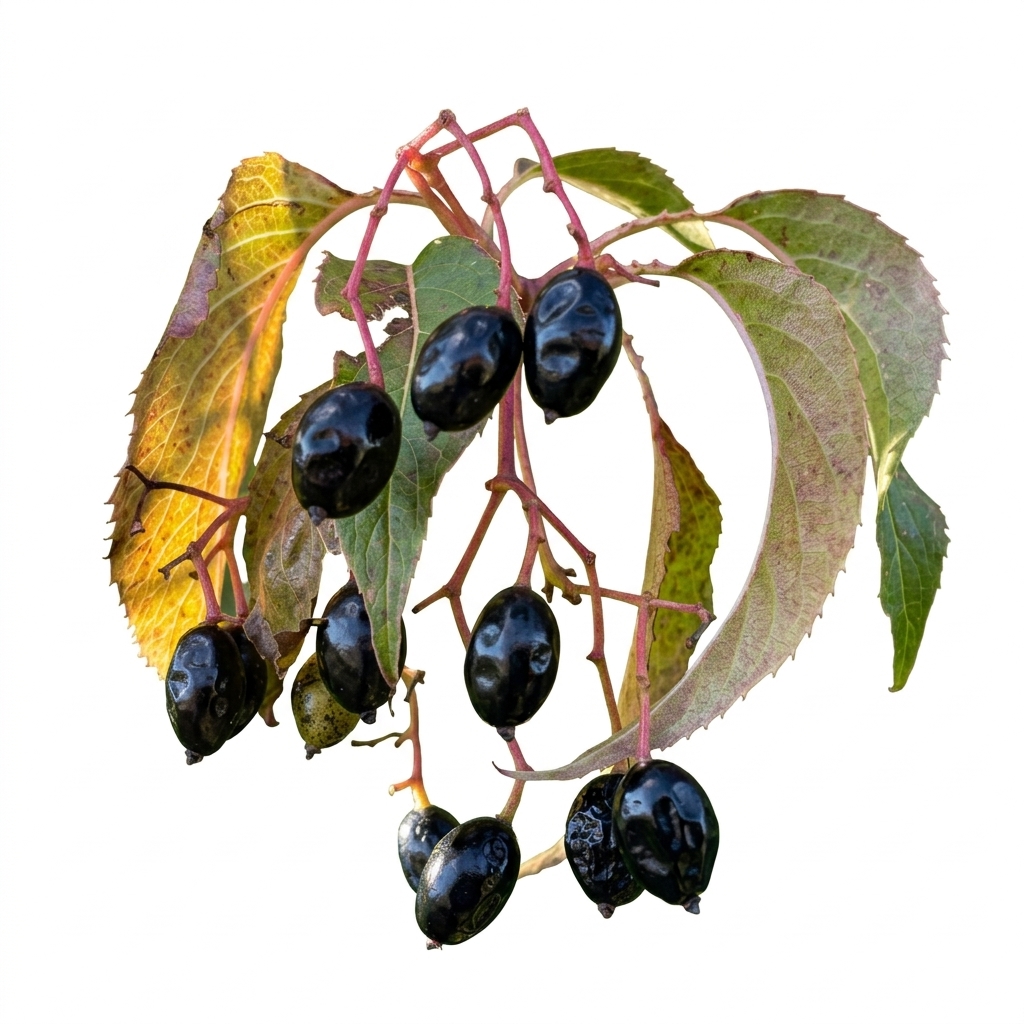
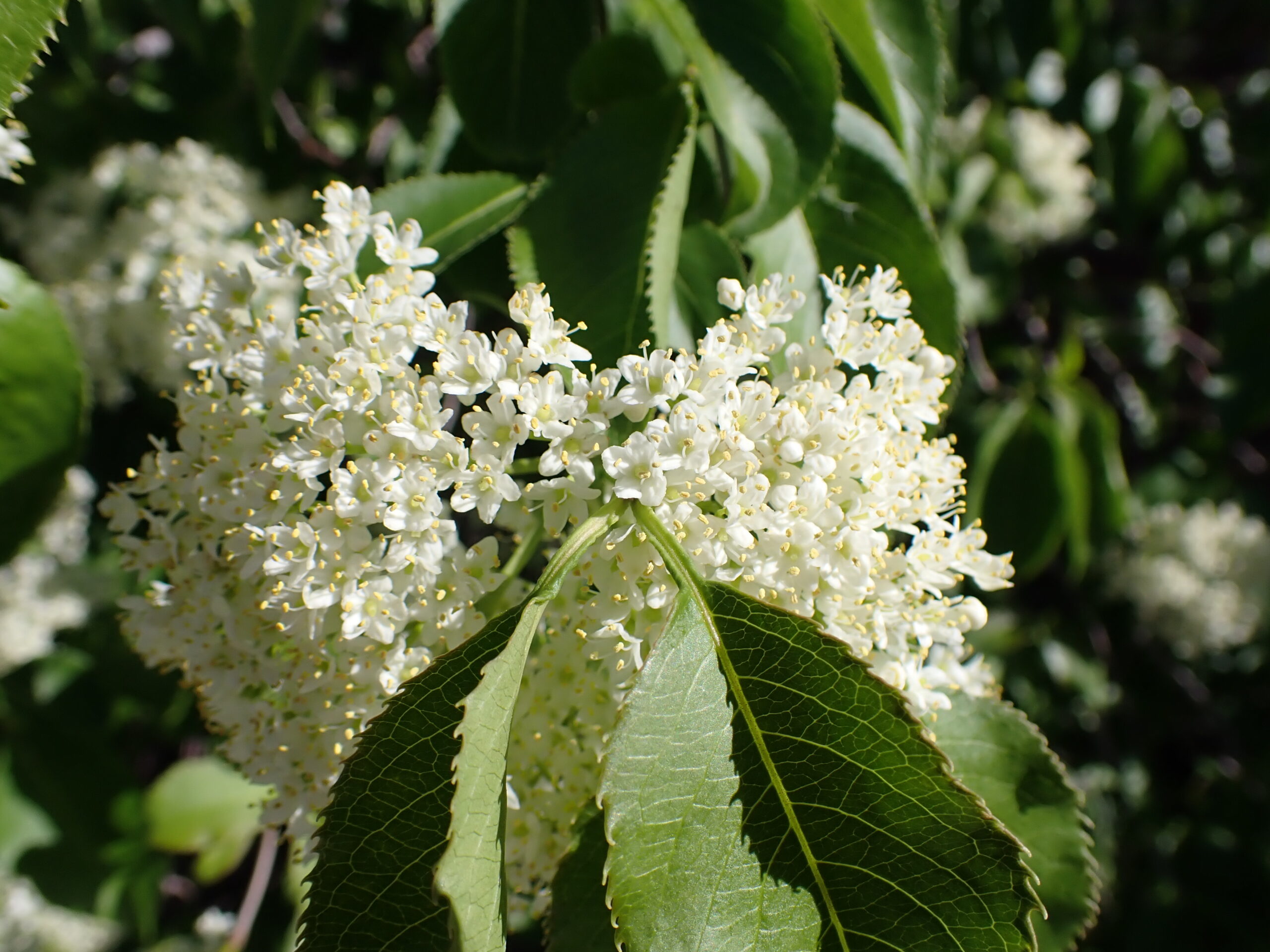
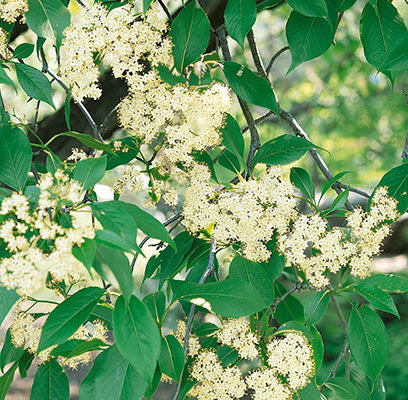
Native to eastern and central North America, Nannyberry (Viburnum lentago) is a tough, versatile native shrub-tree cherished for its heavy production of edible fruit and outstanding four-season landscape value. In spring, large flat-topped clusters of creamy white flowers blanket the foliage, attracting bees and butterflies. By early autumn, these blooms give way to hanging clusters of blue-black berries coated in a silvery bloom. As the fruit ripens—and especially after the first fall frost—the berries soften and sweeten, taking on a texture and flavor remarkably reminiscent of fresh dates or raisins. Exceptionally low-maintenance and adaptable to sunny or shaded sites, Nannyberry also puts on a brilliant autumn show as its glossy leaves turn vibrant shades of deep burgundy, orange, and red. It is attractive to birds and other wildlife.
- Flavor Profile: Sweet, rich, and date-like with notes of raisin and prune; best enjoyed after softening on the branch or after a light frost
- Best Uses: Fresh snacking, fruit leather, jams, jellies, baked goods, and native wildlife plantings
- Harvest Window: September through October (Berries persist on the plant into winter if not picked)
- Pollination: Self-sterile (may be polinated by some other Viburnum species, but for reliable fruit plant two or more plants)
- Hardiness Zone: Zone 2–8 (Extremely cold-hardy, drought-tolerant once established, and adaptable to wet or clay soils)
- Mature Size: 12–20 ft. tall and 6–12 ft. wide (Can be trained as a large multi-stemmed privacy screen or pruned into a small upright tree which my grow up to 30′ tall)
- Fruit Type: Small, oval blue-black drupe containing a flat central seed; held in weeping clusters